
What Should Be in a Church AI Policy? 10 Essential Sections
Jul 02, 2026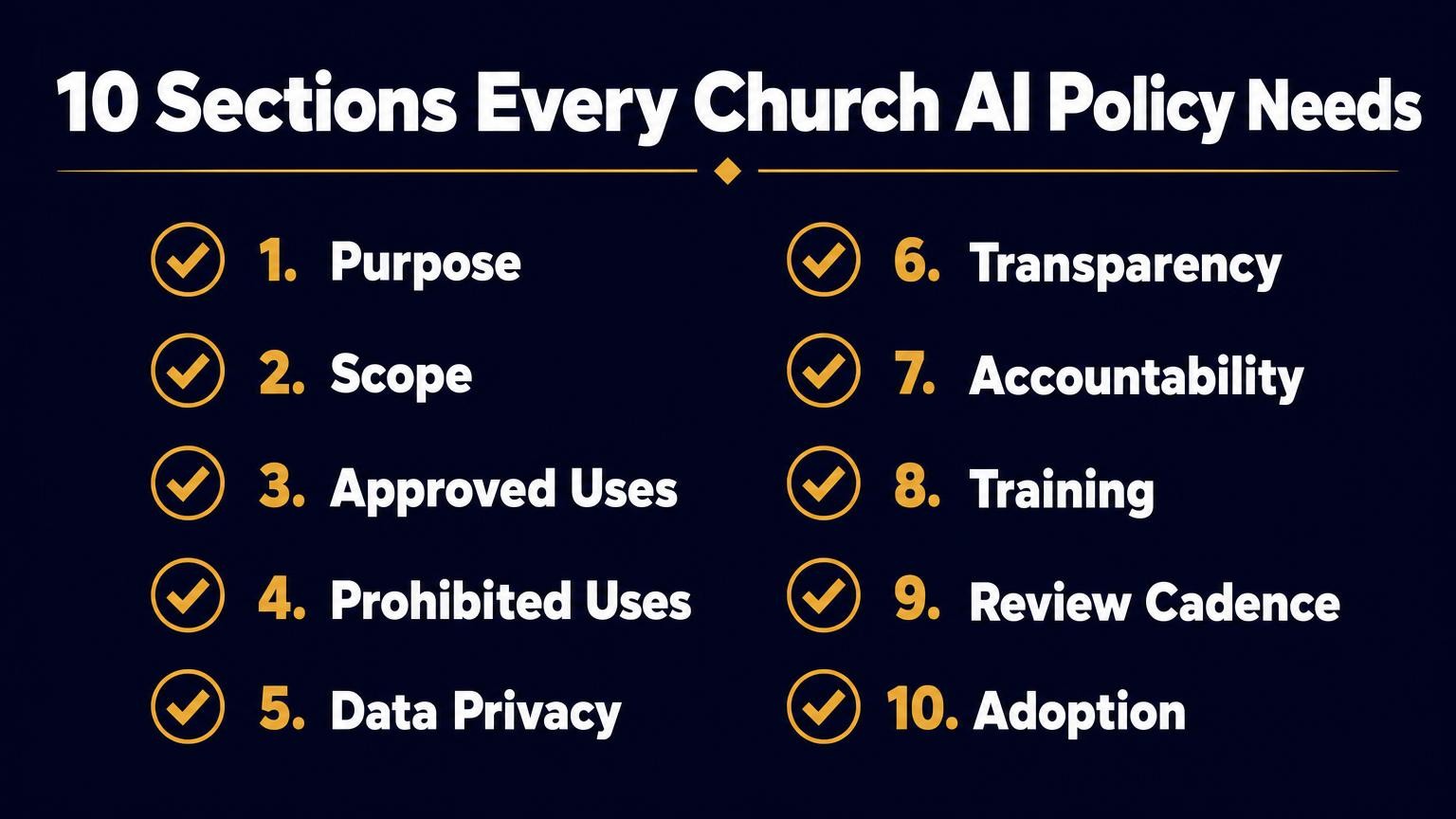
A church AI policy does not need to be long. It needs to cover ten things. Here are the sections every workable policy includes, in the order they belong.
The 10 Essential Sections
- Purpose. Why your church has a policy at all, in two or three sentences.
- Scope. Who and what it covers: staff, volunteers, which tools and tasks.
- Approved Uses. The green light. What AI is welcome for, so people feel free to use it.
- Prohibited Uses. The hard lines. Where AI never goes, like final theological decisions.
- Data Privacy. What information stays out of public tools, and why.
- Transparency. When and how you disclose that AI helped, so trust stays intact.
- Accountability. Who owns the policy, approves tools, and answers questions.
- Training. How staff and volunteers learn to use AI well and safely.
- Review Cadence. When you revisit the policy, since the tools change fast.
- Adoption. How the policy rolls out to the team, not just where it is filed.
Keep It to One or Two Pages
A policy nobody reads protects nobody. Write each section in a few plain sentences, not paragraphs of legalese. Short and used beats thorough and ignored. If you want the structure behind these sections, the five-part framework for writing the policy walks through them in order, and a simple green, yellow, red tool list handles the approved-and-prohibited tools.
Frequently Asked Questions
What goes in an AI policy? Purpose, scope, approved uses, prohibited uses, data privacy, transparency, accountability, training, a review cadence, and an adoption plan. Ten short sections cover a church's needs.
How long should a church AI policy be? One to two pages. Long enough to be clear, short enough that staff and volunteers actually read and remember it.
Who writes the church AI policy? One accountable owner drafts it, usually an executive pastor or operations lead, with input from staff and sign-off from your board or elders.
Turn the List Into a Draft
Put these ten headings on a page and write a couple of sentences under each. For the worksheets and board-ready templates that turn the outline into a finished document, AI Policies Made Simple hands you the whole build.